Performance marketing · 7 min read
Solar panel and battery installer marketing in the UK: winning your own enquiries before VAT goes back up
How UK solar and battery installers can get their own enquiries: the March 2027 VAT change, a quote form that sizes the job, fast replies and honest local ads.
On this page
- How big is the residential solar market right now?
- What changes on 31 March 2027?
- What does a good solar enquiry form ask?
- What should the homeowner see on your website?
- How fast should you reply?
- Which ads work for solar installers?
- Should you keep buying leads?
- How Digital Architect builds a lead system for solar installers
- Frequently asked questions
- About the author
- Sources
Homeowners shopping for solar panels and batteries compare three or four installers, usually online and usually in one evening. The installers who win are the ones who reply first with a sensible size and price range, book a survey without phone tag, and look credible: MCS certification, real local installs and reviews. Build that path on your own website and run local ads to it. The 0% VAT rate on residential solar and batteries ends on 31 March 2027, which gives you a real, time-limited reason to talk to homeowners now.
This guide is for MCS-certified solar PV and battery installers in the UK who want more of their own enquiries.
How big is the residential solar market right now?
Bigger than it's ever been. MCS recorded 267,032 certified rooftop solar installations in 2025, beating the previous record from 2011 by 31%. Battery storage passed 40,000 certified installations, almost double the previous record (Renewable Energy Magazine / MCS, Feb 2026).
Two other findings matter for marketing:
- New builds are a growing share. MCS said more than 36% of solar installations in 2025 went on new homes. Retrofit installers compete for the rest.
- More installers. The number of MCS-certified installers grew 7% in 2025. More firms are bidding for the same homeowners and the same paid leads.
What changes on 31 March 2027?
Installing solar panels and batteries in homes in Great Britain has been zero-rated for VAT since 1 April 2022. The relief is temporary. HMRC's guidance says the zero rate applies until 31 March 2027 (GOV.UK VAT Notice 708/6), after which installations are scheduled to return to the 5% reduced rate.
On a £9,000 system, that's £450 more for the homeowner. It's not a huge sum, but it's real, it's dated, and you can say it without exaggeration. It also means demand is likely to bunch up in early 2027. Installers who build their enquiry flow now will have a booked diary when that happens. Those who start in March will be competing for leads at the busiest time.
Keep the message accurate. Say "scheduled to end on 31 March 2027" and link to GOV.UK. Don't imply the homeowner loses a grant.
What does a good solar enquiry form ask?
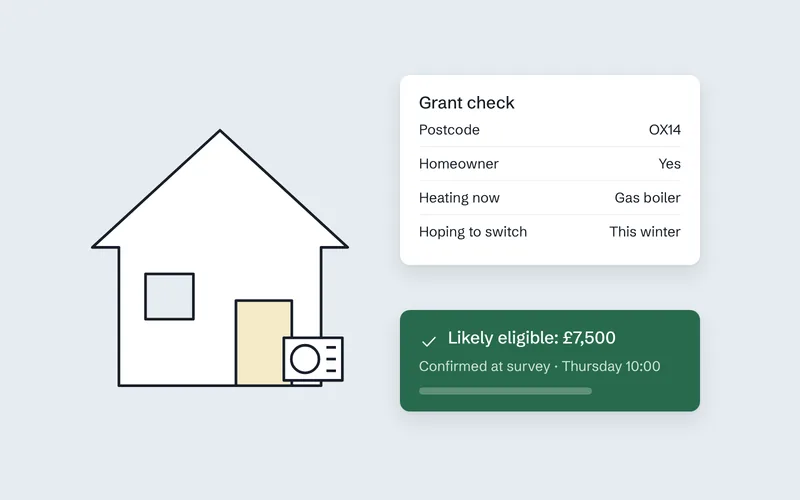
Enough to size the job and give a price range, and no more. Six questions:
- Postcode, to check you cover it and to estimate roof orientation later.
- Property type: detached, semi, terrace or bungalow.
- Roughly how much do you spend on electricity a month? Bands work better than exact figures.
- Do you want a battery? Yes, no or not sure.
- Do you have, or plan to get, an electric car or heat pump? It changes the right system size.
- When are you hoping to install? Before April, this year, or just researching.
Add an optional photo upload of the roof. A homeowner who sends a photo is serious, and it saves you a wasted trip to a roof full of shade.
Then reply with a likely system size and a price range, subject to survey, and a link to book the survey.
What should the homeowner see on your website?
Answer the questions they search before they ring anyone:
- Price ranges for common system sizes, with and without a battery.
- What happens at a survey, how long installation takes and whether they need scaffolding.
- The Smart Export Guarantee (SEG): how selling spare electricity back works, and that they need an MCS-certified installation to get it.
- Planning: most domestic rooftop systems in England are permitted development, with conditions. Explain when they aren't, such as on listed buildings or in some conservation areas.
- Proof: your MCS number, consumer code membership, warranties on panels, inverters, batteries and workmanship, real local installs and reviews.
One page per service helps here: solar panels, solar with a battery, battery-only retrofits and EV chargers. Each can be the landing page for its own ads.
How fast should you reply?
Within minutes, by text or WhatsApp as well as email. Solar buyers fill in several forms at once. The first useful reply, with a sensible system size, a price range and a survey slot, usually decides who gets invited round.
Then follow up over the next few weeks with useful information: how a battery changes savings, what a survey involves, answers to common worries, and a reminder of the VAT date. These are replies to the homeowner's own enquiry, so they're service messages. Promotional newsletters to individuals need consent under PECR.
Which ads work for solar installers?
Google Search catches people already looking: "solar panels [town]", "solar panel installers near me", "solar battery installers". Separate battery-only searches from full systems, and send each to the matching page.
Meta ads reach homeowners who are thinking about it but haven't searched. Real local installs work better than stock photos: a roof in a nearby town, the system size and what the homeowner says about it, with their permission.
Avoid savings claims you can't support. Use ranges, say what they depend on, and keep your figures consistent with your quotes. Advertising rules apply to energy savings claims too.
Should you keep buying leads?
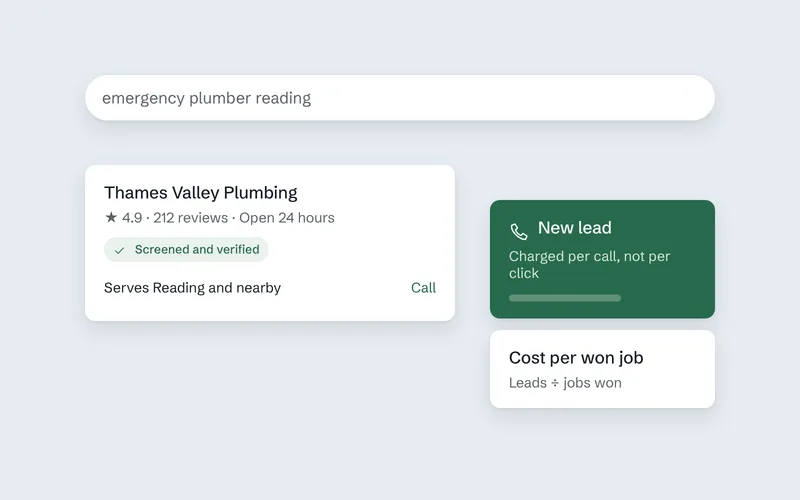
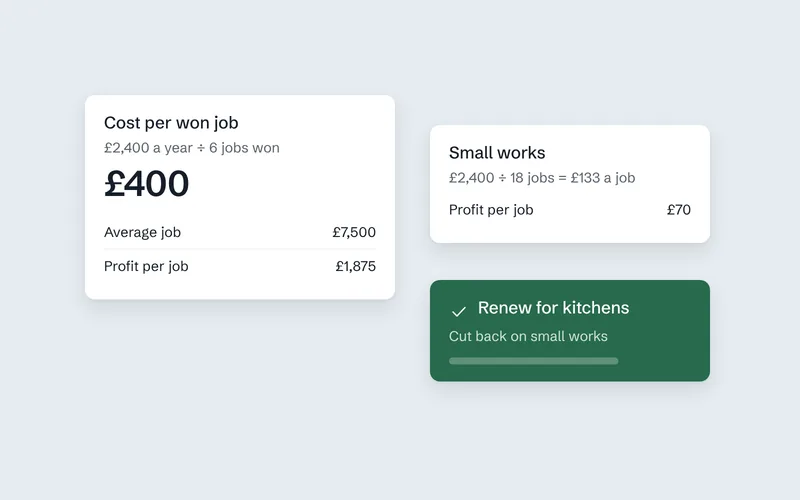
Shared solar leads can be expensive per install, because the same homeowner is often sold to several installers. Track cost per completed install from each source for three months. Then move budget towards the cheapest source, which is often your own ads once they're tuned. See how to work out your real cost per job. If you also fit heat pumps, see heat pump installer leads and the Boiler Upgrade Scheme.
How Digital Architect builds a lead system for solar installers
We set up the whole flow in your name:
- one landing page per service, with real installs, price ranges and your credentials
- a six-question sizing form with roof photo upload
- an instant reply with a likely system size and price range, subject to survey, plus survey booking into your diary
- a follow-up sequence for homeowners who aren't ready yet, accurate on VAT and SEG
- Google Search and Meta ads in the areas you cover, with a monthly report on enquiries, surveys, quotes and installs, by source
We haven't run this for a UK solar installer yet, and we'll say so. The lead system is £1,500 to set up and £1,200 a month, with a three-month minimum. Your ad budget is separate and paid directly to Google and Meta. The first three UK businesses pay £600 a month for their first three months, in return for a published case study. See the lead system for UK businesses page.
Calls run from 5:30 am to 6 pm UK time (6:30 am to 7 pm during BST), every day. To start, book a call.
Frequently asked questions
Is there VAT on solar panels in the UK?
Not at the moment for qualifying residential installations in Great Britain. The 0% rate runs until 31 March 2027, and installations are scheduled to return to 5% VAT from 1 April 2027.
Does a battery qualify for 0% VAT on its own?
Since 1 February 2024, HMRC guidance has included batteries retrofitted to store electricity from qualifying systems such as existing solar panels. Check VAT Notice 708/6 for the exact conditions.
Do customers need an MCS installer?
To get paid for exported electricity under the Smart Export Guarantee, the installation generally needs to be MCS-certified. It's a strong selling point, so show your certificate number clearly.
How much should a solar installer spend on ads?
Start with a fixed test budget in a few towns, measure cost per survey booked, then scale what works. Your written plan should set the figure from local demand and your capacity.
About the author
Arjun Raj is the founder of Digital Architect, a web, app and digital marketing studio founded in 2023 and headquartered in LB Nagar, Hyderabad, with a studio in Bengaluru. The team builds apps and platforms for clients across India, the US, Canada and the UK. Arjun holds a B.Tech in Computer Science and Engineering, specialising in cybersecurity, from IIT Guwahati. More about Arjun
Sources
Get a free lead leak check
Send us your website. Arjun will send one test enquiry the way a customer would, time how long the reply takes, check the page it lands on and your Google profile, and email you what is losing enquiries and what to fix first, within two working days. It's free, with no obligation.