SEO & answer engines · 11 min read
Local SEO for Small Businesses in Oxfordshire: A 2026 Guide
Local SEO in Oxfordshire, step by step: Google Business Profile, UK citations, reviews, town pages from Oxford to Didcot, call tracking and a 90-day plan.
On this page
- What decides who appears for "plumber in Abingdon"?
- How should you set up your Google Business Profile for Google Maps?
- Should you list as a storefront or a service-area business?
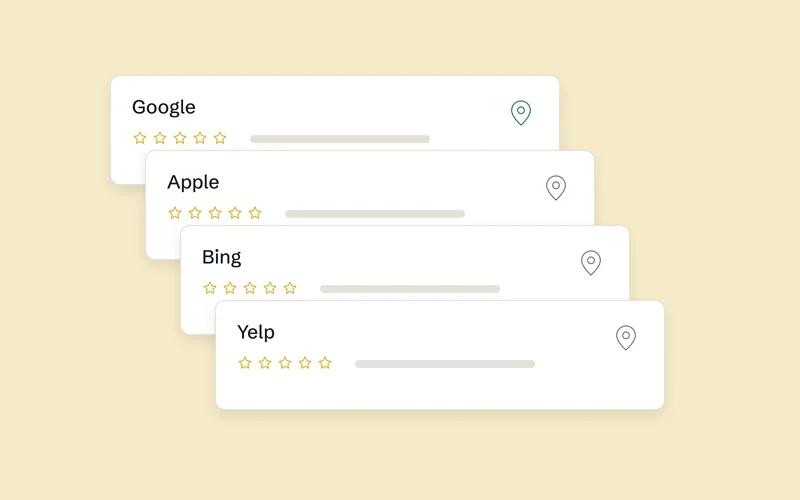
- Do Apple Maps and Bing Places matter for a local business?
- Which UK directories and citations are worth the effort?
- How do you get more Google reviews without breaking the rules?
- How do you build town pages that are not doorway pages?
- How should you track calls and forms from local search?
- A first-90-days local SEO plan
- Do you need an Oxfordshire-based agency for local SEO?
- Frequently asked questions
- About the author
Local SEO for an Oxfordshire small business means appearing in Google's map results and local organic results when someone nearby searches "plumber in Abingdon" or "dentist Witney". It rests on an accurate Google Business Profile, consistent details across Apple Maps, Bing and UK directories, a steady flow of genuine reviews, useful pages for the services and towns you cover, and tracking that shows which calls and forms came from search.
This guide is for owners and managers of trades, clinics, shops, cafés and professional firms in Oxford, Abingdon, Didcot, Witney, Banbury, Bicester, Thame, Henley-on-Thames, Wallingford and Kidlington, and in nearby Reading, Swindon and Milton Keynes.
What decides who appears for "plumber in Abingdon"?
Google says local results depend mainly on relevance, distance and prominence. Relevance is how well your profile matches the search. Distance is how far you are from the searcher or the place they named. Prominence is how well known you are, which includes reviews and links from other websites (Google Business Profile Help, accessed Oct 2026).
Google also states that "there's no way to request or pay for a better local ranking." Treat any guaranteed top-three map position with suspicion.
In practice:
- You cannot change distance. A heating engineer based in Didcot will find "boiler repair Didcot" easier than "boiler repair Oxford", however good the profile.
- Relevance is your own work. That means the right categories, a full services list and website pages that describe exactly what you do.
- Prominence takes longest. It builds through reviews, local links and accurate listings across the web.
Whether someone types "electrician Bicester", "physio near me" in Kidlington or just "emergency locksmith", Google treats the search as local, and the same groundwork serves all three.
How should you set up your Google Business Profile for Google Maps?
Use your real-world business name, the fewest and most specific categories that describe your core business, and a local phone number someone answers. Then fill in every field that applies.
Google's guidelines (Google Business Profile Help, accessed Oct 2026) settle the common mistakes:
- Name. "Your name should reflect your business's real-world name." "Smith Plumbing – Best Plumber Oxford Abingdon" is not permitted.
- Categories. Choose "the fewest number of categories it takes to describe your overall core business", as specific as possible. A practice offering implants is still a dentist first.
- Phone. "Use a local phone number instead of a central call center helpline number whenever possible." The number must be under your direct control.
- Address. A virtual office or mailing address you do not operate from is not eligible.
- One profile per business. No extra profiles for each town you cover. Each real, staffed location may have its own.
Then add services, opening hours (including bank holidays), attributes such as accessibility and parking, and real photos of your premises, team and work. Link single-location profiles to your home page and multi-branch profiles to each branch's own page.
See also: Local SEO and Google Business Profile management
Should you list as a storefront or a service-area business?
It depends on whether customers come to you. If they visit your premises, show the address. If you go to them and do not receive customers at your base, remove the address and set a service area.
Google's rules (Google Business Profile Help, accessed Oct 2026):
- Up to 20 service areas, set by town, city or postcode. A radius is not allowed.
- About two hours of driving. Your overall area "shouldn't be more than about 2 hours of driving time from where your business is based".
- Hybrid businesses that serve customers at their address and also travel should "enter both your address and service area".
In Oxfordshire terms:
- A roofer working from home in Witney removes the address and lists Witney, Carterton, Burford, Oxford and the postcode districts they actually cover.
- A café in Thame or a physio clinic in Henley-on-Thames is a storefront and shows the address.
- A carpet shop in Banbury that also fits in customers' homes is a hybrid: shop address plus the towns it fits in.
A service area does not make you rank in every town listed. Distance still applies, so a Witney roofer listing Milton Keynes will rarely appear there. List only places you genuinely serve.
Do Apple Maps and Bing Places matter for a local business?
Yes. Both are free, each takes under an hour, and they reach people who never open Google Maps: iPhone users asking Siri or Apple Maps for directions, and anyone searching on Bing or Windows.
Apple Business. Apple announced Apple Business in March 2026 as a single platform replacing Apple Business Connect from 14 April 2026. Existing Business Connect data moved across automatically; new businesses claim their location on Maps first. Place cards with your photos, hours and details appear across Apple Maps, Safari, Spotlight and more (Apple Newsroom, 24 Mar 2026). Apple notes some features are limited to selected countries, so check what applies in the UK when you sign in.
Bing Places. Microsoft relaunched Bing Places for Business in October 2025 at bing.com/forbusiness, with an improved import from Google that keeps details such as name, hours and contact information. Listings appear in Bing search and Bing Maps (Bing Search Blog, 3 Oct 2025). Finish your Google profile first, import it, then check the categories.
Which UK directories and citations are worth the effort?
A citation is any listing of your business name, address and phone number on another site. A handful of accurate listings on sites your customers actually use beats fifty thin directories, because they confirm your details to search engines and people find you there directly.
A sensible shortlist:
- Yell and Thomson Local. Claim and correct your free listings, whether or not you ever pay for an upgrade.
- Checkatrade, for trades. Homeowners search it directly and read reviews there before reaching Google.
- Trustpilot, where it fits: online shops and some professional and service firms, more than a local café. Only take it on if you will invite reviews there consistently.
- Your trade or professional body's "find a member" directory, a relevant link that is hard to fake.
- Local sources: your chamber of commerce, town business directories and local sponsorships that link back.
Match Companies House. A limited company must show its registered name, number, registered office address and place of registration on its website, and its company name on all publicity (GOV.UK, accessed Oct 2026). Customers know you by your trading name, so use that name everywhere and put the legal details in the website footer. Then "Abingdon Heating" on Google and "AH Services Ltd" at Companies House are clearly the same business.
Use one phone number and one exact address format on every listing. A business that moved premises and never updated its old Yell listing is still telling search engines, and customers, two different addresses.
How do you get more Google reviews without breaking the rules?
Ask every customer, at the same point in the job, with a direct link. Never pay or offer anything for reviews, never write them yourself, and never filter out customers you expect to be unhappy.
Google's policy prohibits offering "incentives – such as payment, discounts, free goods and/or services – in exchange for posting any review", and prohibits businesses that "discourage or prohibit negative reviews, or selectively solicit positive reviews from customers". Reviews based on a conflict of interest, including current or former employment, are removed (Maps User Generated Content Policy Help, accessed Oct 2026). A "happy customers go to Google, unhappy ones to the manager" flow breaks this rule.
UK law. Since 6 April 2025 the Digital Markets, Competition and Consumers Act 2024 has explicitly banned posting and commissioning fake reviews, and the CMA can now fine businesses that break consumer law up to 10% of global turnover (GOV.UK, 7 Apr 2025). The CMA's guidance explains that reviews hiding an incentive are banned too, and expects businesses that publish reviews on their own site to take reasonable steps to prevent and remove fake ones (CMA, 4 Apr 2025).
A routine that works:
- Copy the direct review link from your Google Business Profile.
- Send it by text or email on the day the job or appointment ends.
- For shops and cafés, put a QR code at the till.
- Reply to every review, positive and negative, within a few working days. Clinics should keep replies general and never confirm that the reviewer was a patient.
How do you build town pages that are not doorway pages?
Build a town page only when you have something specific to say about working there. If the page reads just as well with the town name swapped, it is a doorway page, and Google treats those as spam.
Google's spam policies give, as an example of doorway abuse, "having multiple domain names or pages targeted at specific regions or cities that funnel users to one page" (Google Search Central, accessed Oct 2026). Since May 2026 Google has stated that these policies also apply to its generative AI responses, so thirty templated "Plumber in [Town]" pages put your AI Overviews visibility at risk too.
A town page earns its place with:
- Real work there: two or three recent jobs with photos and, with permission, the customer's first name or street.
- Who covers it and how fast: "Our Bicester van is usually with you the same day in OX26" is useful; "we serve Bicester and surrounding areas" is not.
- Local detail that changes the job: listed buildings and conservation areas for a builder, parking and access for a clinic.
- Reviews from customers in that town, and a clear phone number and short form.
Start with the two or three towns that send you the most work according to your job records, and add more as you gather material. If you have nothing specific to say about Swindon, do not build a Swindon page yet.
See also: Website development
How should you track calls and forms from local search?
Count enquiries, not visits: profile calls, profile website clicks, form submissions and calls placed from the website, checked each month against the jobs you actually booked.
- Business Profile performance shows calls (taps on the call button), website clicks, direction requests, bookings and messages for verified profiles (Google Business Profile Help, accessed Oct 2026).
- Google Analytics 4. Since June 2026 you can link GA4 to your Business Profile from the Admin panel and see seven core profile metrics, including calls, directions and website clicks, on a rolling six-month window (Google Analytics Help, accessed Oct 2026).
- UTM tags on the profile's website link, such as
utm_source=google&utm_medium=organic&utm_campaign=gbp, separate profile visits from other organic traffic in GA4 (Google Analytics Help). - Key events in GA4 for form submissions and
tel:link clicks, each tested with a real enquiry. - A source question. Ask "how did you hear about us?" on the phone and the form. Many people find you on Google, then ring the number on your van.
If you use call tracking, choose a local number you control, such as an 01865 number in Oxford. Google requires numbers under your direct control and bans numbers that redirect users elsewhere. Keep your main number consistent across Yell, Checkatrade and other listings.
A first-90-days local SEO plan
These are planning ranges, not guarantees. A new business in a crowded category in central Oxford will take longer than an established one in Wallingford.
Days 1–30: foundations
- Claim and verify your Google Business Profile; correct the name, categories, phone and hours.
- Choose storefront, service area or hybrid, and set the areas you genuinely cover.
- Add services, attributes and at least ten real photos.
- Set GA4 key events for forms and calls, link GA4 to the profile, and tag the profile's website link.
- Fix one exact version of your name, address and phone, and match your website footer to it.
Days 31–60: listings and reviews
- Claim Apple Business and Bing Places, importing from Google where possible.
- Correct Yell and Thomson Local, plus Checkatrade or Trustpilot if they fit.
- Start the review routine and reply to every review.
- Improve your main service pages so each covers one service well.
Days 61–90: town pages and review
- Publish town pages for your two or three busiest areas, with real jobs and photos.
- Earn two or three local links: a trade body, a sponsorship, a supplier's "where to buy" page.
- Compare calls, enquiries and booked jobs with month one, and decide which towns and services come next.
Profile fixes often show in calls and direction requests within four to eight weeks. Ranking for a competitive service in a busy town usually takes three to six months.
Do you need an Oxfordshire-based agency for local SEO?
No. Most local SEO work happens in your Google Business Profile, your listings and your own website, and none of it needs someone in the county. What does need local knowledge is the detail: which towns you really serve, which directories your customers use, and how people in Didcot or Witney phrase a search. A good provider asks you those questions before quoting.
Whoever you hire, check that:
- the Business Profile stays in your own Google account, with the agency added as a manager, not the owner;
- they will not create a profile at an address where you have no staffed premises;
- their reports show calls, direction requests and form enquiries, not only rankings.
Digital Architect works with UK businesses remotely, from Hyderabad and Bengaluru. We built Build-Hive, a construction software platform based in Oxfordshire, and its website. If you want help with your Business Profile, listings or town pages, send us your website and the towns you cover and we will tell you what we would fix first.
Frequently asked questions
Do I need a separate Google Business Profile for each town I cover?
No. Google allows one profile per business, or per real, staffed location. Cover other towns with service-area settings and town pages on your website.
Can I use my home address for a Google Business Profile?
Yes, if you run the business from there. If customers do not visit, remove the address and set a service area. A virtual office you do not work from is not eligible.
Is it legal in the UK to ask customers for reviews?
Yes, if you ask every customer and the reviews are genuine. Fake or commissioned reviews are banned under the DMCC Act 2024, and Google prohibits incentives and selective requests.
Are Yell and Thomson Local still worth having?
Claiming and correcting the free listings is worth an hour, because inconsistent details weaken local signals. Judge paid upgrades on the enquiries they bring.
How many town pages should I create?
Start with the two or three towns that already send you the most work, and only where you can show real jobs there.
Should I hire an Oxfordshire SEO agency or do it myself?
Most of this guide is work an owner can do in a few hours a month: the profile, listings and reviews. An agency earns its fee on the technical side, town pages and call tracking. Whoever you choose, ask for references and avoid anyone who guarantees a ranking.
How long does local SEO take in Oxfordshire?
Profile fixes often show in four to eight weeks. Competitive searches in Oxford, Reading or Milton Keynes usually take three to six months, and longer for a new business.
About the author
Arjun Raj is the founder of Digital Architect, a web, app and digital marketing studio founded in 2023, with its head office in LB Nagar, Hyderabad, and a studio in Bengaluru. The studio works with clients in India, the United States, Canada and the United Kingdom, including Build-Hive, an Oxfordshire construction SaaS platform for UK builders (case study). Arjun holds a B.Tech in Computer Science and Engineering, specialising in cybersecurity, from IIT Guwahati. More about Arjun
Working out where to start? Tell us your business, the towns you cover and what you run today, and we will tell you which of these steps we would do first. See our local SEO service or talk to Digital Architect.
Get a free local search check
Tell us your business and the town you serve. Arjun will compare your Google Business Profile with the three businesses that appear above you, and email you what to fix first within two working days. It's free, with no obligation.