SEO & answer engines · 12 min read
Local SEO for Service Businesses in the US and Canada: Google, Apple, Bing and Yelp in 2026
How US and Canadian service businesses rank on Google, Apple Maps, Bing and Yelp in 2026, and get reviews within FTC and Competition Bureau rules.
On this page
- What decides who shows up in the local map results?
- How should a service-area business set up its Google Business Profile?
- How does Google Business Profile verification work in 2026?
- What gets a Google Business Profile suspended, and how do you appeal?
- Do Apple Maps, Bing and Yelp still matter?
- Which directories are worth it in the US and Canada?
- How do you get reviews without breaking the FTC rule or the Competition Act?
- Are Google Local Services Ads worth it, and are they available in your area?
- How do you build location pages that are not doorway pages?
- How should you track calls from local search?
- A 90-day local SEO plan
- Frequently asked questions
- About the author
Local SEO for a service business in the US or Canada means a verified, rule-compliant Google Business Profile, matching listings on Apple Maps, Bing and Yelp, a steady flow of genuine reviews, and location pages that show real local work. Reviews must be collected within the FTC's 2024 rule in the US and the Competition Act in Canada, and every call should be traceable to the listing or page that produced it.
This guide is for owners and managers of home-service companies, clinics, law and accounting firms, and contractors in US and Canadian cities.
What decides who shows up in the local map results?
Google says local results depend mainly on relevance, distance and prominence. Prominence covers "how many websites link to your business and how many reviews you have", and Google states plainly that "there's no way to request or pay for a better local ranking" (Google Business Profile Help, accessed Oct 2026).
You cannot change where the searcher stands. So for a search like "HVAC repair Austin" or "dentist Mississauga", the work goes into three things:
- Relevance: the right categories, a complete services list, and website pages that match the services people search for.
- Prominence: reviews, links from local organisations, and consistent listings across the platforms below.
- Conversion: a profile and landing page that make calling or booking easy. Ranking without calls is wasted effort.
How should a service-area business set up its Google Business Profile?
If you visit customers rather than receiving them, you are a service-area business. Google's rules on this are specific (Guidelines for representing your business, accessed Oct 2026):
- Hide your address if customers do not come to you. A business with a staffed storefront that also travels can show the address and set a service area.
- Keep the service area realistic. Google says it "shouldn't extend farther than about 2 hours of driving time" from your base, though larger areas may suit some businesses.
- Use one profile per business, not one per city you serve. A plumber in Austin does not get separate profiles for Round Rock and Pflugerville unless it has staffed locations there.
- Use your real-world name. Google does not allow "unnecessary information" in the name. "Smith Plumbing" is acceptable; "Smith Plumbing – 24/7 Emergency Plumber Austin" is not.
- Choose few, specific categories. Google asks you to "choose the fewest number of categories it takes to describe your overall core business" and not to use categories as keywords.
- Use a phone number you control, ideally a local one rather than a call-centre line.
Professional practices have further rules. A lawyer, accountant or dentist in a public-facing role may have a personal profile. Where several practitioners work at one location, the firm keeps its own profile as well. A solo practitioner at a branded practice should share one profile named "[brand]: [practitioner name]".
See also: Local SEO and Google Business Profile
How does Google Business Profile verification work in 2026?
You cannot choose your method: "Verification methods are automatically determined by Google." The options include phone or text, email, a live video call, postcard and instant verification. Google recommends video where it is offered (Google Business Profile Help, accessed Oct 2026).
For a recorded video, Google requires an "unedited, unique, and complete recording with no breaks", at least 30 seconds long, recorded and uploaded from a phone through the profile (Google Business Profile Help, accessed Oct 2026). It should show:
- Where you operate: street signs or landmarks near your address. If you work from home, show signs in your immediate neighbourhood.
- Proof the business exists: your tools, equipment, branded clothing or business cards.
- Proof that you manage it: for example, unlocking a branded van, or a permit, invoice or utility bill in the business name.
Do not show bank, tax or ID numbers, or other people's faces. Plan the route before you press record, because a recording with a break will be rejected.
What gets a Google Business Profile suspended, and how do you appeal?
Most suspensions trace back to the guidelines above: keywords in the name, a virtual office or co-working desk without signage and staff, a PO box, duplicate profiles for the same location, or a service-area business showing a home address. Google's guidelines say lead-generation agents are not eligible for a profile at all.
If you are suspended, do not create a new profile; appeal through Google's appeals tool instead. You can appeal only once. Supporting evidence can include a business registration, licence, tax certificate or utility bill showing the same name and address as the profile (Google Business Profile Help, accessed Oct 2026). Keep these documents filed before you need them.
Do Apple Maps, Bing and Yelp still matter?
Yes. Each one feeds results that Google does not control, and setting them up is free.
Apple Business. On 14 April 2026, Apple replaced Business Connect with a single free platform called Apple Business. Existing Business Connect data migrated automatically. You claim your location and manage your place card (photos, hours, details) across Apple Maps, Wallet, Siri and Mail (Apple Newsroom, 24 Mar 2026).
Bing Places. Microsoft relaunched Bing Places in October 2025. It now lives at bing.com/forbusiness, is free, and has a rebuilt import from Google Business Profile (Bing Blogs, 3 Oct 2025). Clean up your Google profile first, then import it and check the categories that carry over.
Yelp. Claiming a Yelp page is free, and advertising is a separate, optional product (Yelp for Business, accessed Oct 2026). Yelp's rules differ from Google's in one important way: it tells businesses "Don't ask anyone to review your business", and warns that requested reviews may not be recommended by its software (Yelp Support Center, accessed Oct 2026). On Yelp, complete the page, add photos and reply to reviews, but do not run review campaigns there.
Which directories are worth it in the US and Canada?
A few, chosen carefully. Inconsistent copies of your name, address and phone number across the web confuse customers and make your data look unreliable.
- Better Business Bureau. The BBB covers businesses in the US and Canada. It is not a government body. Accreditation is voluntary and paid for with annual dues, and it commits you to the BBB Standards for Trust, including good-faith complaint resolution (BBB, accessed Oct 2026).
- YellowPages.ca. In Canada, YellowPages.ca (yp.ca redirects there) still offers a free listing alongside its paid advertising (YellowPages.ca, accessed Oct 2026).
- Professional and licensing directories. Law societies, state bars, dental associations and contractor licence lookups carry more weight with clients than generic directories. Make sure your entries there match.
NAP consistency in practice: write one master record (legal name, trading name, address or service area, main phone, website URL and hours). Copy it exactly to every listing, and update every listing whenever it changes. A move or a new phone number without updating listings is one of the most common causes of lost calls.
How do you get reviews without breaking the FTC rule or the Competition Act?
Ask every customer the same way, offer nothing on Google, never write or buy reviews, and disclose any connection between a reviewer and the business.
United States. The FTC's Trade Regulation Rule on the Use of Consumer Reviews and Testimonials took effect on 21 October 2024 (FTC Q&A, accessed Oct 2026). It prohibits (FTC, 14 Aug 2024):
- fake reviews, including AI-generated ones, and buying them;
- incentives conditioned on a positive (or negative) review;
- undisclosed reviews by owners, managers and employees;
- review sites you control that pose as independent;
- suppressing negative reviews through threats or false accusations;
- buying fake followers or views.
Courts can impose civil penalties for knowing violations. The maximum is $53,088 per violation (FTC, Feb 2025), a 2025 level the FTC has kept for 2026 (Federal Register, 15 Sep 2026).
Two points catch people out. First, the FTC rule allows incentives that are not tied to sentiment, but Google does not: its policy bans offering "payment, discounts, free goods and/or services" for reviews and selectively asking only happy customers (Maps User Generated Content Policy, accessed Oct 2026). Second, the FTC says asking only satisfied customers is not specifically banned by the rule but "could violate the FTC Act".
Canada. The Competition Act prohibits materially false or misleading representations, and its civil provisions specifically cover the "untrue, misleading or unauthorized use of tests and testimonials" (Competition Bureau, modified Feb 2026). In 2015, Bell Canada paid a C$1.25 million penalty after employees were encouraged to post app reviews without disclosing that they worked for Bell (Competition Bureau, 14 Oct 2015). Civil penalties for a corporation can now reach the greater of C$10 million (C$15 million for repeat violations) or three times the benefit, or 3% of worldwide gross revenues where the benefit cannot be determined (Competition Bureau, accessed Oct 2026).
A compliant review routine:
- Send every customer the same review link by text or email within a day of the job or appointment.
- Offer no reward for Google reviews, and never filter unhappy customers out of the request.
- Tell staff not to review the business, and not to ask relatives to.
- Reply to every review within a working day. Clinics should never confirm in a reply that the reviewer is a patient.
- Keep Yelp out of the routine, in line with its own policy.
This is general information, not legal advice. Check specific campaigns with your own counsel.
See also: Reputation management
Are Google Local Services Ads worth it, and are they available in your area?
They can be, for home services and some professional categories, because you pay per lead rather than per click. Check availability first, because two things have changed.
The badges have changed. On 20 October 2025, Google replaced the Google Guaranteed, Google Screened and License Verified badges with a single "Google Verified" badge, and discontinued the money-back guarantee attached to Google Guaranteed (Search Engine Roundtable, 21 Aug 2025). Google's own help pages now refer only to Google Verified, and say the badge is unavailable in the auto, beauty and dining categories (Local Services Help, accessed Oct 2026).
The product is moving into Google Ads. Local Services Ads are becoming Performance Max campaigns with pay-per-lead goals, and Google says ad placements on Search and Maps stay the same. The first phase began in August 2026 with selected US home-service categories such as plumbing, HVAC, electrical and roofing. Service-area businesses follow in late 2026, and non-US accounts and all remaining categories in 2027 (Google Ads Help, accessed Oct 2026).
Availability depends on country, category and sometimes state. Google's US category list includes HVAC, plumbers, dentists, lawyers and tax services, but restricts some categories to California and Florida. Canadian categories differ. Enter your exact category and location in Google's sign-up flow before you plan a budget around it. Screening can include background, licence and insurance checks, depending on category and location (Local Services Help, accessed Oct 2026).
How do you build location pages that are not doorway pages?
Build a page only for a place where you genuinely work, and put something on it that could not appear on any other city's page.
Google's spam policies define doorway abuse as pages "created to rank for specific, similar search queries". Its examples include multiple pages aimed at specific cities that all funnel users to one page (Google Search Central, accessed Oct 2026). Fifty pages that read "Best roofer in [city]" with only the city name changed fit that description exactly.
A location page that earns its place includes:
- the team or crew that covers the area, and how quickly they can reach it;
- real jobs completed there, with your own photos;
- local specifics, such as permit requirements, housing stock or common problems in that area;
- reviews from customers in that area, with their consent;
- the services offered there, if they differ from elsewhere.
If you cannot write that for a town, list it in your service area instead of giving it a page.
How should you track calls from local search?
Most local leads arrive as phone calls, so measure calls by source, not just clicks.
- Google profile: use a number that rings straight through to the business, stays under your control, and is not a premium-rate line, as Google's guidelines require. Profile performance reports show calls made from the profile.
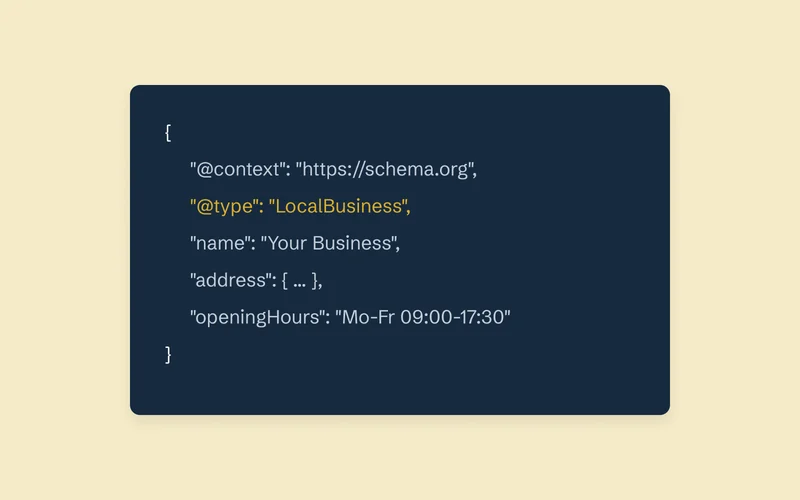
- Website: use call tracking that swaps the displayed number by traffic source. Keep the main number in your site's structured data and footer, so your core listing details stay consistent.
- Measure qualified calls: count calls above a minimum duration as conversions in Google Analytics 4 and Google Ads, and review missed calls weekly.
- Recording: consent laws vary by state, and some require every party's consent (Reporters Committee for Freedom of the Press, accessed Oct 2026). If you record calls, announce it at the start of every call.
A 90-day local SEO plan
Days 1–30: foundations
- Write the master NAP record and fix the Google Business Profile: name, categories, service area, hours and phone.
- Prepare verification and appeal documents: registration, licence and a utility bill in the business name.
- Claim Apple Business, Bing Places (import from Google) and Yelp, then the BBB and YellowPages.ca if relevant.
- Set up call tracking and conversion events, and test them with a real call.
Days 31–60: reviews and pages
- Start the review routine for every customer, and reply to every review.
- Write location pages only for areas where you have real jobs, crews and photos.
- Check whether Local Services Ads are available for your category and city.
Days 61–90: measure and adjust
- Compare calls, bookings and review counts by source.
- Add photos and posts to the Google profile monthly, and correct any listing that has drifted from the master record.
Frequently asked questions
Should a service-area business show its home address on Google?
No. Google tells service-area businesses to hide the address if customers do not visit, and to set a service area instead.
Can I create a Google Business Profile for every city I serve?
No. Google allows one profile per business. Separate profiles are allowed only for separate, staffed locations.
Can I offer a discount in exchange for a review?
Not for Google reviews: Google prohibits incentives of any kind. The FTC rule allows incentives that are not tied to positive sentiment, but platform rules still apply.
Is Google Guaranteed still available?
No. Since 20 October 2025, Local Services Ads carry a single Google Verified badge, and the money-back guarantee has been discontinued.
Do Local Services Ads work in Canada?
Google runs them in Canada, but categories differ from the US, and Canadian accounts move into Google Ads in 2027. Check your category in the sign-up flow.
Should I ask customers to review us on Yelp?
No. Yelp's policy is not to ask, and it may not recommend reviews it believes were requested.
About the author
Arjun Raj is the founder of Digital Architect, a digital marketing and development studio headquartered in LB Nagar, Hyderabad, with a studio in Bengaluru. Since 2023 it has delivered work for clients across India, the US, Canada and the UK. Arjun holds a B.Tech in Computer Science and Engineering, specialising in cybersecurity, from IIT Guwahati. More about Arjun
Want a second opinion on your local listings? Send us your business name, category and the cities you serve. We will tell you what we would fix first, in a written plan, before any work starts. Talk to Digital Architect.